
We asked Dr Phil Parker, the osteopath and psychologist behind the Lightning Process, to answer some of your commonly asked questions. We hope you find it useful...
Q: Let’s start with the most commonly asked question; What is the Lightning Process?
A (Dr Phil): That’s a great question! The Lightning Process is a science-based training programme that gently guides you through a fascinating journey of learning how to use your brain to change the way your body works.
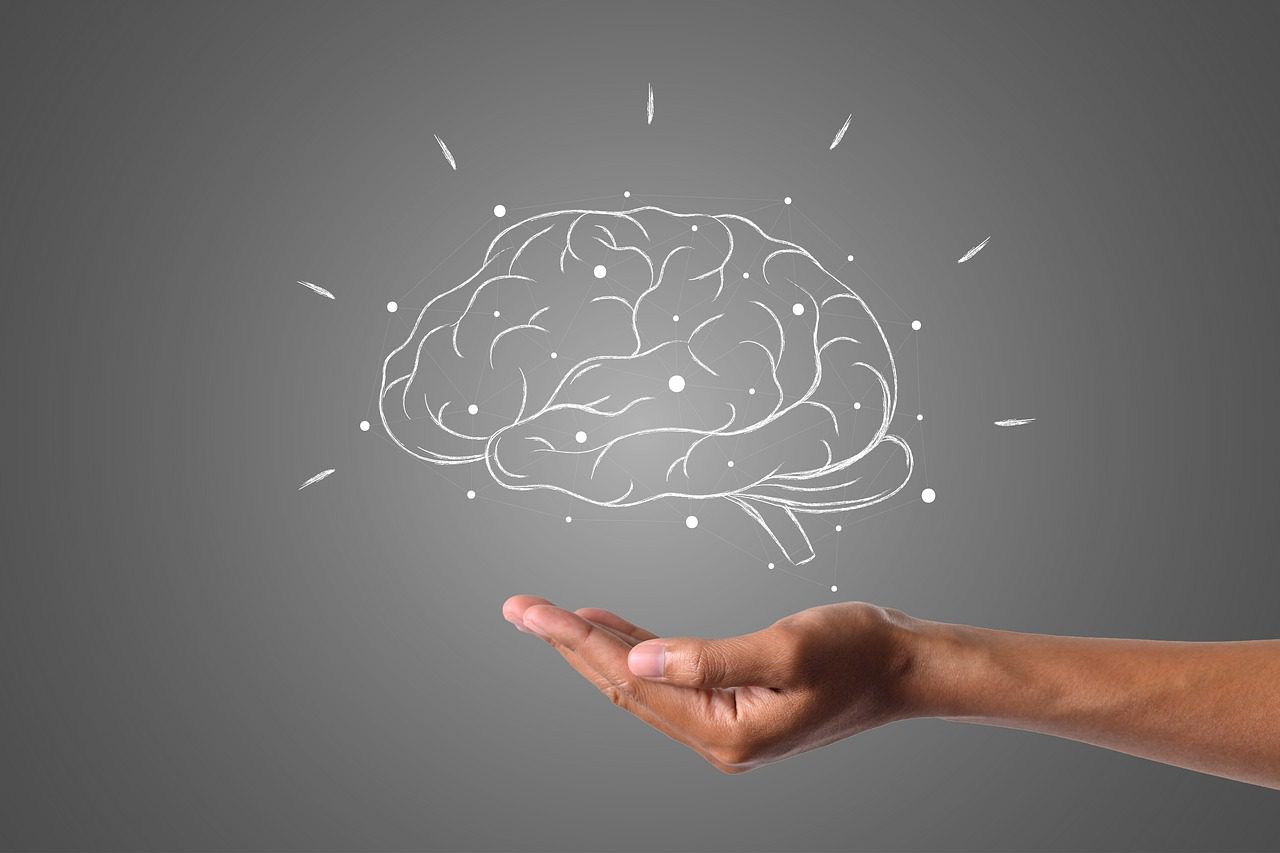
Q: Can you really change how your body works by changing how you use your brain? That’s not a very familiar idea to many people.
A (Dr Phil): This is a very common and important question. I found it a bit difficult to get my head around it to start with too. When growing up, this was not how I was taught to think about health. Instead, like most of us, the common approach to health was to see a doctor for pills or medicine – and that works well much of the time. But there are some issues that don’t respond that well to drugs or the usual approaches – what do we do then?
Over the last 50 years, there has been a lot of research into the intriguing area of how much we can tap into our body’s ability to reset systems that have gone awry and improve our health by using our brains differently. This area of health research is called Psycho Neuro Immunology or mind-body approaches.
If you’ve not heard much about this before then you’re not alone. Many medical researchers who are not directly working in the field are also unaware of the extensive research. It is only when they begin reading the published papers that they start to understand this fascinating and cost-effective opportunity to help improve people’s health. It’s surprising to find out how much our body is affected by the brain.
Q: Can you outline some of this research – in simple terms?
A (Dr Phil): Yes. One of the reasons people don’t know enough about the research is that studies are often hard to understand due to the academic style of writing. Here are a few of the thousands of studies available that will give you an idea of how important this is:
Parkinson’s Disease
Parkinson’s Disease is a neurological illness caused by a lack of dopamine production in the brain. Common symptoms are tremors and stiffness. In a study, Parkinson’s Disease patients were injected with the drug apomorphine. It takes on the role of the missing dopamine and relieves symptoms for about 6-8 hours.
By the second day the symptoms had returned, as expected, and another injection of the drug was given, with similar improvements. (1) The same process of giving the drug and improvements in symptoms was repeated on day three and four. Except on day four, the syringe contained a ‘placebo’ with the drug replaced with inert salt water. However, the symptoms still reduced as if they had been given the actual drug.
But how does this work? Researchers call this ‘pairing’; the patients had experienced that the injection reduced symptoms. This occurred enough times that the body connected, or ‘paired’, the injection with the improvement.
Interestingly, on the fourth day, the patients who were also part of a different study, were operated on to implant electrodes into the part of their brain that should produce dopamine. This gave the researchers an opportunity to see what was happening in the patient’s brains as a result of the ‘placebo’ injection. They found that the area of the brain involved in Parkinson’s Disease was now responding more normally. They concluded this was caused by the brain producing its own dopamine as a result of the ‘placebo’ injection.
Immune system
There are some drugs that are used to calm down the immune system these are called immunosuppressive drugs. In a few different studies, patients were given an immunosuppressive drug mixed into an unusually strange tasting, brightly coloured drink. After a few times this ‘paired’ the drink and the drug. Now the researchers found that just giving them the strange tasting drink was enough to calm down the immune system.
In one study they examined if it could reduce the amount of immunosuppressive drugs patients needed after a kidney transplant – it did. (2)
Another study looked at how the ‘paring’ affected the cells and interleukins, the important messenger molecules, of the immune system. Researcher found that just taking the drink reduced the amount of white blood cells and interleukins produced by the body. (3)
A further study found that the activity of the immune cells in the skin could also be reduced by the same pairing method. (4)
Here we have strong evidence of the brain, having made the connection between the drink and the drug, is somehow able to create changes in the body just by the memory of the drug that is triggered by taking the strange drinking tasting drink that it was paired to.
But these are just a few studies from thousands showing similar effects. Others include studies where meditators have a boosted immune system compared to non-mediators (5), ones that show thinking about a calming memory reduces the amount of cortisol – a immunosuppressive hormone (6), or ones where just being told a placebo cream will help reduces skin inflammation (7).
Q: That’s I so interesting. Why don’t more people know about this?
A (Dr Phil): In medicine and science experts tend to specialise into one field or another. Many people have had this experience, when they have four different problems and they find they need to see four different experts, as each consultant has their own speciality. They are not that many people studying Psycho Neuro Immunology, so most experts won’t be familiar with the research.
And when you first hear about it, it can sound a bit odd, to be honest.
It’s only when you actually look at the fascinating research, such the studies above, that you start to realise the potential of the body and brain interaction. It has an effect, according to the research, on such a large range of conditions. And it’s important to remember that the ‘placebos’ or strange drinks themselves aren’t having an actual effect – they can’t as they don’t contain any active drugs. All the effects found are due to the brain changing the way the body works.
The question our research has been focusing on is: how you can take these fascinating and health changing effects and teach people to switch them on all by themselves, without the need for strange-tasting drinks or placebos pills. The result of this research is the Lightning Process, which helps you unlock the power of the link between the mind-brain-body and use your brain to have a profound and long lasting effect on your physical health.
You can find the studies referred to below:
- Benedetti F, Colloca L, Torre E, et al. Placebo-responsive Parkinson patients show decreased activity in single neurons of subthalamic nucleus. Nat Neurosci. 2004;7(6):587-588. doi:10.1038/nn1250
- Kirchhof J, Petrakova L, Brinkhoff A, et al. Learned immunosuppressive placebo responses in renal transplant patients. Proc Natl Acad Sci. 2018;115(16):4223-4227. doi:10.1073/pnas.1720548115
- Goebel MU, Trebst AE, Steiner J, et al. Behavioral conditioning of immunosuppression is possible in humans. FASEB J. 2002;16(14):1869-1873. doi:https://doi.org/10.1096/fj.02-0389com
- Goebel MU, Meykadeh N, Kou W, Schedlowski M, Hengge UR. Behavioral conditioning of antihistamine effects in patients with allergic rhinitis. Psychother Psychosom. 2008;77(4):227-234. doi:10.1159/000126074
- Davidson RJ. Alterations in brain and immune function produced by mindfulness meditation. Psychosom Med. 2003;65(4):564-570. doi:10.1097/01.PSY.0000077505.67574.E3
- Speer ME, Delgado MR. Reminiscing about positive memories buffers acute stress responses. Nat Hum Behav. 2017;1(5):s41562-017-0093-017. doi:10.1038/s41562-017-0093
- van Laarhoven AIM, Vogelaar ML, Wilder-Smith OH, et al. Induction of nocebo and placebo effects on itch and pain by verbal suggestions: Pain. 2011;152(7):1486-1494. doi:10.1016/j.pain.2011.01.043


